


Three Track Week #35: Pop, Pressure and the Self

Three songs about knowing your worth, chasing bigger things and figuring out who you are when everyone is watching.
This week's Three Track Week 35 brings together three songs that approach pop from very different places. Donna Dafi writes about confidence and knowing your worth, DIIV play with the space between guitar music and a culture built around streams, algorithms and scale, and Catie Turner turns the uncomfortable question of who we are online into a catchy pop song. Three artists, three very different sounds and three songs that have more going on underneath the surface than you might expect.
Donna Dafi - “Good Morning”
“Good Morning” starts with a beat that immediately gets you moving. The drums have an almost marching quality, while Donna Dafi’s voice comes in warm, clear and confident. The melody catches quickly. There is no long build-up before the song tells you what it is about.

Sound / Mood
The production is relatively stripped back. Bass, drums and vocals do most of the work, with a few carefully placed elements filling out the space. The beat keeps a steady pulse underneath everything, while Dafi’s voice stays firmly in front. The chorus is the hook. It has something almost chant-like about it, but it is still melodic enough to stay in your head. The song feels polished and contemporary without being overloaded with production.

Why This Matters
“Good Morning” is built around a familiar pop idea: know your worth, stop waiting for your life to happen and make your own decisions. There have been countless versions of that message. What makes Dafi’s version more interesting is the identity behind it. She was born in Stuttgart to a Nigerian-German mother and a Kosovan-Albanian father. Those backgrounds are not just a detail in her biography. They form part of the cultural space in which she has developed as an artist, alongside music, fashion and visual storytelling. That matters in a pop landscape where artists increasingly build their public identity across several cultural references at once. Dafi is not presenting herself through one fixed tradition. Her work moves between contemporary pop and R&B, global and Afro-inspired rhythms, European fashion culture and the different family histories she grew up with. “Good Morning” sits comfortably inside that world. Its message of self-possession is universal enough for mainstream pop, while Dafi’s own background gives the idea a more specific place to come from. It is less about inventing a new message than about deciding who gets to deliver it and on whose terms.
Context
Dafi has been performing from a very young age. She started playing piano at six and recorded her first song at nine with Albanian artist Sabri Fejzullahu. The proceeds from that song supported children in Kosovo who had lost their parents during the Kosovo War. She now works closely with her younger brother Rinor Kastrati, who produces her music. Her 2026 releases include “Good Morning”, “Primadonna”, “Touch Me Like That”, “Mango”, “Trouble” and “Goddess”. Music is only one part of the world she is building. Fashion and visual storytelling are closely connected to her work, including a campaign for ESCADA Fragrances. “Touch Me Like That” also received a Silver Award at the Berlin Music Video Awards in 2026. That combination is worth keeping in mind when listening to “Good Morning”. This is a pop song about confidence, but it is also part of a wider contemporary pop culture in which sound, image, heritage and personal identity increasingly exist side by side.
🎧 Stream "Good Morning” on Apple Music · Follow Donna Dafi on Instagram
Advertisement
Distribute your music to Spotify, Apple Music, TikTok and 150+ other platforms with Ditto Music.
Keep 100% of your royalties and release as much music as you want.
DIIV - “Trillions”
“Trillions” starts with a guitar riff that immediately gets stuck in your head. It is bright, rhythmic and surprisingly positive for a DIIV song. The drums keep pushing it forward, while the bass moves almost like another rhythm underneath the guitars. Zachary Cole Smith’s vocals stay calm and melodic. The chorus brings the electric guitar further forward, then the song drops back into the more relaxed verse. Everything seems to float a little. The different guitar sounds sit neatly on top of each other without making the track feel crowded.

Sound / Mood
There is a very clear pop instinct in “Trillions”. The riff is easy to remember, the rhythm keeps moving and the chorus arrives without needing to announce itself. At the same time, it still sounds like DIIV: hazy guitars, a certain looseness in the vocals and that slightly dreamlike feeling that runs through the arrangement. What surprised me most is how light the song feels. DIIV have made much heavier and darker records, but “Trillions” almost glides along. Even the bass feels playful, constantly stepping through the track while the guitars keep everything suspended above it.
Why This Matters
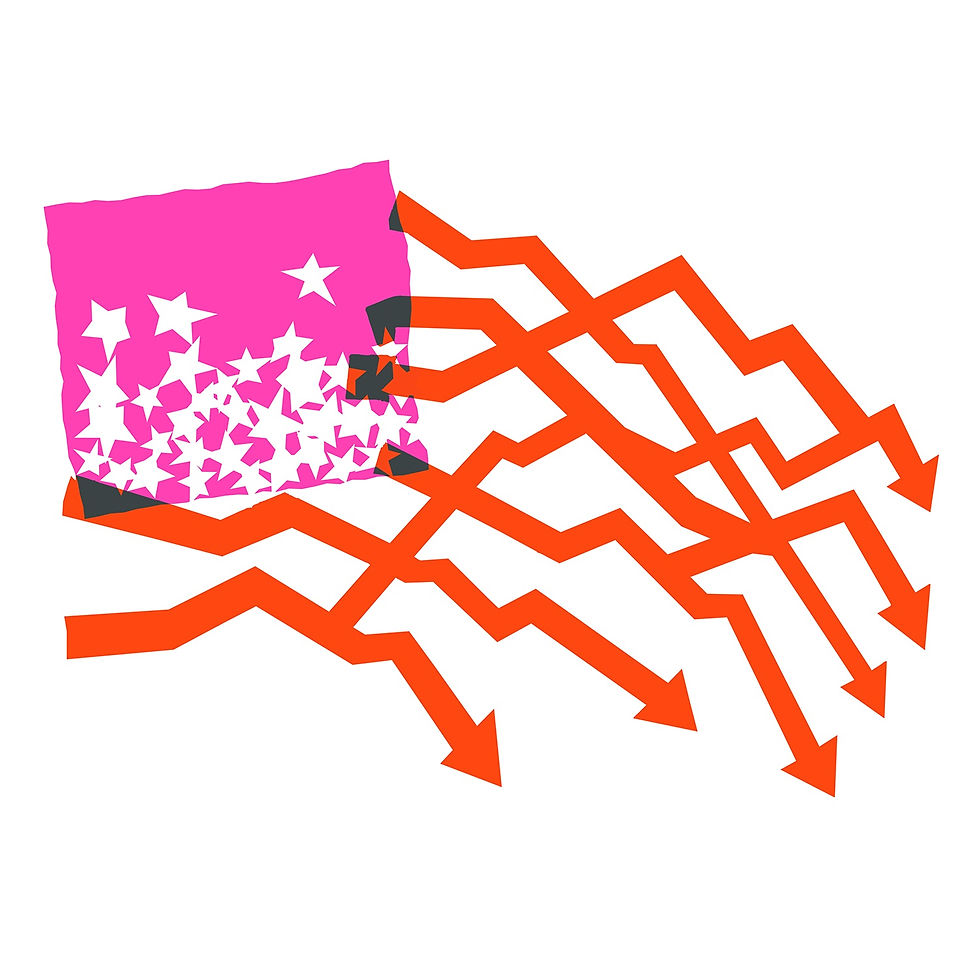
The song makes more sense when you look at what the album ”ZIRP!” is trying to do. DIIV are calling this “The New Alternative” - a deliberately awkward name for a musical world that does not seem particularly interested in the old divisions between alternative, pop, shoegaze, electronic music and whatever else used to come with its own scene. That idea feels quite specific to the 2020s. Music is now consumed in an environment where genres are constantly being mixed, recommended and repackaged by platforms and algorithms. At the same time, artists are expected to be both distinctive and immediately accessible. A song can come from an underground guitar band and still be designed around a pop hook that works perfectly in a much larger context. “Trillions” plays with exactly that tension. It is probably the most openly pop-oriented song DIIV have made, but the band are not abandoning their history to get there. The guitars are still doing much of the emotional work. Even the title of the album points towards this wider world. ”ZIRP!” refers to “zero interest rate policies”, the economic conditions that helped produce the startup economy and a culture increasingly organised around users, platforms, growth and endless optimisation. The word “trillions” fits that language perfectly. It sounds like money, data, streams and scale. And then there is the video: big house, fast cars, suits, cash. It could be genuine aspiration. It could be satire. It could be both at the same time. That uncertainty is probably more interesting than choosing one interpretation.
Context
DIIV have been working between underground guitar music and pop melody for most of their career. Their previous records have moved through shoegaze and grunge, while "ZIRP!" pushes the pop side much further. Producer A. G. Cook became an important part of that change. Rather than simply turning DIIV's demos into glossy pop productions, he spent time watching the band live and recording around their physical sound. He pushed for live drums and detailed guitar parts, with less reliance on computer-based production than might be expected from a producer so closely associated with contemporary pop. That combination is what makes “Trillions” interesting. It sounds more immediate than a lot of DIIV’s earlier material, but it does not feel like they have simply polished away the rougher edges. The song still floats. It just has a much stronger hook underneath it. "ZIRP!" is due on October 30 via Fantasy Recordings, with “Trillions” arriving as the latest preview of an album that seems to be asking what an alternative band can become once the old boundaries between underground credibility and pop ambition stop being so useful.
SEGO TOUR 2026

SEGO are heading out on tour this October, bringing their indie-pop and art-punk sound to stages across Germany, Austria and the Netherlands. We previously featured “Tandang” (you can read it here) - now you can catch the band live on their European dates:
14.10. Amsterdam | Paradiso - Tickets
15.10. Tournai | Water Moulin - Infos
16.10. Paris | Supersonic - Infos
19.10. Bochum | Bastion - Infos
20.10. Mainz | Schon Schön - Infos
21.10. Kiel | Hansa 48 - Tickets
22.10. Kopenhagen | Rahuset - Tickets
24.10. Flensburg | Volksbad - Tickets
26.10. Warschau | Metal Cave - Infos
27.10. Berlin | Kantine am Berghain - Tickets
28.10. Nürnberg | Die Kaiserburg - Tickets
29.10. München | Lost Weekend - Tickets
30.10. Graz | Music-House - Tickets
31.10. Wien | Club Lucia - Tickets
3.11. London | The Black Heart - Tickets
4.11. Manchester | The Peer Hat - Tickets
5.11. Glasgow | Nice’n’Sleazy - Tickets
6.11. Norwich | Voodoo Daddy’s - Tickets
Catie Turner - “Who Am I”
A strummed guitar, a warm high voice, then a little picked guitar line. “Who Am I” takes a moment before the drums come in and give it some shape. It has a slightly melancholic feel at first, but the chorus is much more confident. There are claps in there too and suddenly the whole thing feels lighter.
Sound / Mood
The guitars give the song a soft, floating quality. Nothing feels too heavy or overproduced, and Turner’s voice stays very clear in the middle of it. The bridge changes things a little. There are suddenly a lot more words, packed closely together, with claps and small sounds underneath. It feels more like someone thinking out loud than a neatly written pop verse. Then the song goes back into the chorus. And that chorus really does stay in your head.

Why This Matters
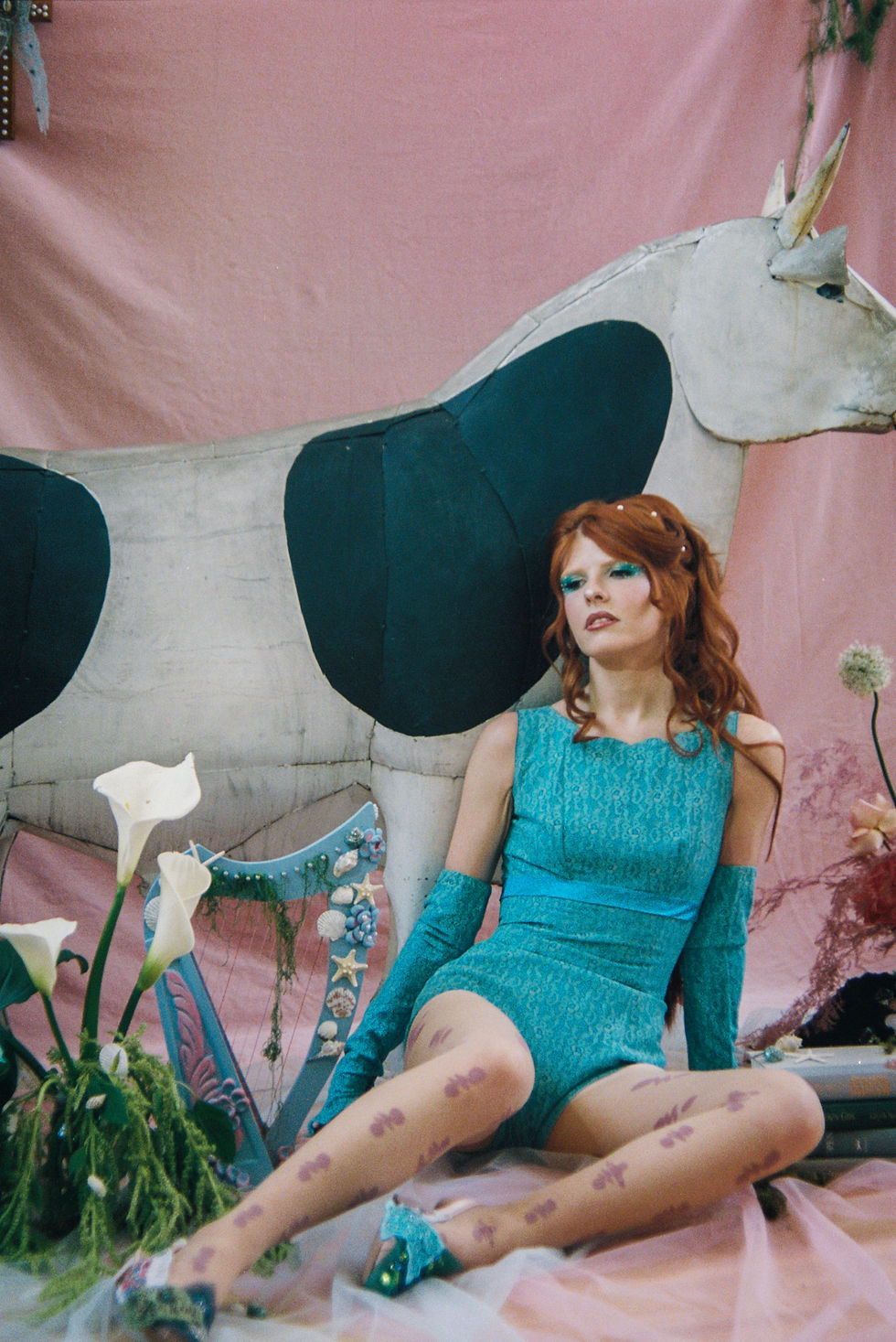
“Who Am I” is about not being entirely sure who you are when you spend a lot of time thinking about how other people see you. That feels particularly relevant to being a musician now. Social media is part of the job. You post yourself, talk about yourself, show people what you are working on and at some point the version of yourself that exists online becomes part of your career. Turner puts it pretty bluntly herself: when your identity and the way you perform that identity become a form of capital, you start wondering where the actual person is underneath it. The song does not sound like a crisis, though. That is probably what makes it work. The music is warm, catchy and easy to listen to. The question underneath it is much less comfortable. The video plays with the same idea. Turner tries out different looks in a 70s-inspired room, accompanied by a cartoon version of herself. It is fun and a little strange at the same time. Different versions of Catie, all in the same room.
Context
Turner grew up in Langhorne, Pennsylvania and first became widely known through ”American Idol” in 2018. Since then, she has released three EPs and accumulated more than 250 million streams, with “God Must Hate Me” becoming her breakthrough song. She is now based in Los Angeles and is preparing to release her debut album, ”Blue Alchemy”. “Who Am I” is the final single from the record. The song was produced and co-written by Carobae. Turner has said that she normally edits her writing heavily, but the bridge was written as one continuous stream of thoughts. You can hear that change in the song. The neatness disappears for a moment and everything comes out at once. For a song asking such a simple question, “Who Am I” leaves quite a bit behind it. Not a big answer. Just the question, still there.
🎧 Stream "Who Am I” on Apple Music · Follow Catie Turner on Instagram
Three songs. Three different ways of dealing with identity, ambition and the pressure to be seen. Together, they reflect a pop culture where confidence can become part of an image, underground music can openly flirt with the mainstream, and even the question of who you are can become content. Different sounds, different perspectives, but all three show how closely music is now tied to the way we present ourselves - and how difficult it can be to separate the person from the persona.
Further perspectives are available in our Artist Features, Cultural Essays and On This Track, each situating music within broader cultural and structural contexts.



Comments