


Three Track Week #14
- Editorial Staff

- Apr 19
- 8 min read
From emotional suspension to collective release and political testimony

This week’s Three Track Week 14 selections trace different ways in which contemporary independent artists navigate presence under conditions of uncertainty, pressure and conflict. Rather than converging around a shared genre or sonic identity, the tracks highlight distinct practices: sustaining emotional ambiguity through movement, transforming personal tension into collective energy, and articulating violence through narrative voice.
Listen to this week’s Three Track Week 14 selection
This week’s tracks are available in our playlist INDIENOXZINE I Selections, offering a direct way to engage with the sounds discussed in this feature. Follow the playlist on Spotify to stay updated with new selections each week.
Kyle Waves – Navigation, Uncertainty and Emotional Suspension
With “Rose-Tinted”, Kyle Waves situates his sound within a space defined by transition rather than arrival. Positioned between dance-pop, synth-pop and early 2000s references, the track does not resolve the emotional uncertainty it addresses. Instead, it sustains it through movement. The result is a form of pop that operates less as affirmation and more as navigation: a way of remaining active within instability.

Sound / Mood
“Rose-Tinted” unfolds through a restrained but persistent rhythmic structure. Synth-driven textures, filtered percussion and layered vocals create a sense of forward motion that never fully accelerates into release. The production draws on Y2K-era pop aesthetics, but avoids direct pastiche. Instead, these references function as tonal anchors, situating the track within a familiar sonic memory while maintaining a contemporary sensibility.
The atmosphere is defined by suspension. Melodies remain fluid, avoiding sharp transitions or definitive peaks. Vocals are present, but not dominant, positioned within the mix rather than above it. This creates a sense of immersion rather than confrontation. The listener is not directed toward resolution, but held within an ongoing state of movement.
The imagery associated with the track - late-night environments, slowed perception, neon lighting - reinforces this structure. Time appears stretched. Emotional states are not intensified, but prolonged. The club becomes less a site of release than a space where uncertainty can be inhabited without interruption.

Why this matters
“Rose-Tinted” reflects a broader shift within contemporary pop toward representing uncertainty as a sustained condition rather than a problem to be solved. In contrast to narratives that frame emotional struggle as something to overcome, the track maintains ambiguity. Doubt, disorientation and self-questioning are not resolved, but integrated into the experience of the song. This approach aligns with changing representations of early adulthood within music culture. Rather than presenting identity as a linear progression toward clarity, artists increasingly depict it as unstable, iterative and shaped by ongoing negotiation. The track’s focus on “moving forward” does not imply direction, but continuity. Progress is defined not by certainty, but by persistence. The use of dance as a structural element is central here. Movement becomes a form of coping, but also of expression. The act of dancing does not erase emotional complexity; it coexists with it. This reflects a shift in how the dancefloor is positioned within contemporary music. It is no longer framed solely as escapism, but as a space where emotional states can be processed without requiring resolution.
Context
Kyle Waves’ positioning across cultural and geographic contexts informs this in-between state. As a Singapore-born, New York-based artist working within queer and diasporic frameworks, his music reflects multiple points of reference rather than a singular identity position. Influences from both Eastern and Western pop traditions are not blended into a unified style, but remain visible within the structure of the track.
This multiplicity extends to the thematic level. Questions of belonging, direction and self-definition are not framed as personal anomalies, but as structural conditions shaped by movement across spaces, cultures and expectations. “Rose-Tinted” operates within this context as part of a broader artistic trajectory: one that examines how identity is constructed not through resolution, but through ongoing adaptation. In this sense, the track does not offer clarity. It offers continuity. A way of remaining present within uncertainty, without requiring it to disappear.
Homebase – Urgency, Emotional Release and Collective Momentum
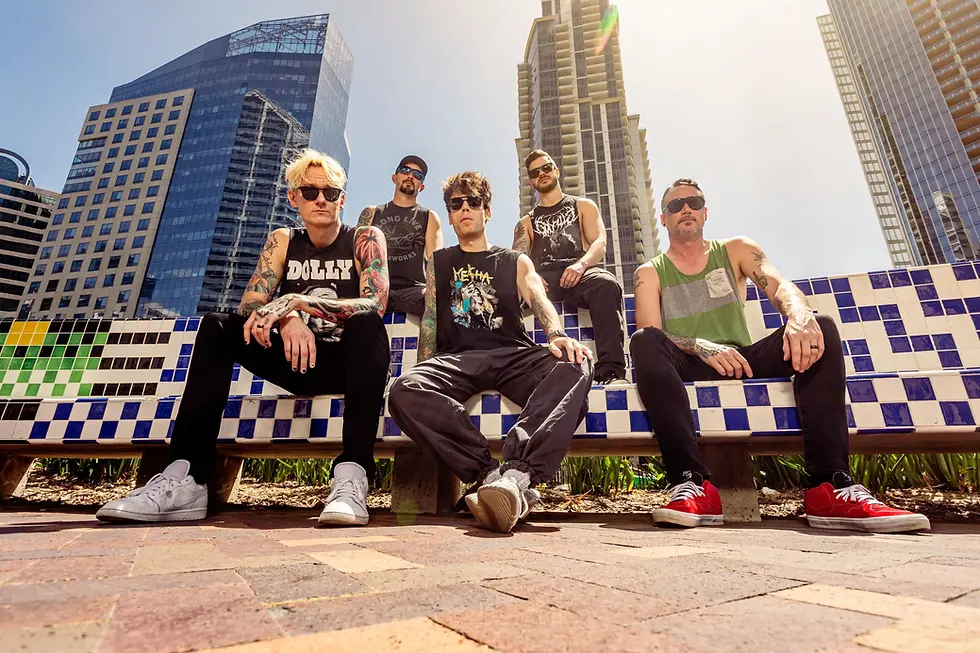
With “Close To Something,” Homebase position themselves within a lineage of punk that prioritizes immediacy and collective energy over stylistic reinvention. Operating between pop-punk and hardcore, the EP does not attempt to redefine genre boundaries. Instead, it intensifies their existing practice: channeling emotional pressure into shared, physical release.

Sound / Mood
“Close To Something” is structured around compression and release. Fast-paced rhythms, tightly constructed hooks and layered vocal delivery create a sense of constant forward motion. The production remains direct and unembellished, allowing the energy of the performance to remain central. The interplay between hardcore aggression and pop-punk melody defines the EP’s dynamic. Guitar work remains sharp and percussive, while vocal lines are built for repetition and collective participation. Rather than emphasizing contrast, the songs integrate both elements into a single continuous flow. This results in a sound that feels immediate rather than expansive. Tracks do not build toward distant climaxes; they operate in the present. Energy is sustained, not accumulated. The listener is not guided through a narrative arc, but placed inside a constant state of intensity.

Why this matters
The EP reflects a broader persistence of punk as a practice rooted in participation rather than innovation. In a music landscape often oriented toward individual visibility and digital consumption, “Close To Something” emphasizes a different function: music as a shared, physical experience. Lyrics centered on self-doubt, pressure and internal conflict are not presented as isolated introspection. Instead, they are externalized through performance. The act of shouting, repetition and collective engagement transforms personal experience into something communal. This dynamic highlights a key aspect of contemporary punk scenes. Emotional vulnerability is not opposed to intensity; it is embedded within it. Rather than resolving tension, the music amplifies it, allowing it to be processed through movement, volume and shared presence. The emphasis on immediacy also reflects a resistance to overproduction and aesthetic distance. The EP does not rely on conceptual framing or layered abstraction. Its impact lies in directness: sound, voice and energy aligned toward a singular function, collective release.
Context
Homebase’s emergence between the New Jersey and New York punk scenes situates the band within a long-standing regional infrastructure defined by DIY practices, local venues and touring circuits. Their development through live performance rather than digital virality reinforces this positioning. Formed in 2023, the band’s trajectory reflects a model of growth based on repetition and presence: playing shows, building local recognition and sustaining momentum through community engagement. This approach aligns with broader patterns within independent punk ecosystems, where visibility is often constructed through physical networks rather than platform metrics alone. The EP’s focus on themes such as creative pressure, uncertainty and persistence further situates it within the lived realities of early-stage independent artists. Rather than presenting a fixed identity, “Close To Something” documents a process: navigating space within a crowded scene, negotiating direction and maintaining continuity under unstable conditions. In this sense, the release does not function as a statement of arrival. It operates as continuation: an extension of a practice built on movement, repetition and the ongoing construction of collective space.
Ryan Cassata ft. Jesediah – Testimony, Violence and the Politics of Voice
With “Blood Is On Your Hands”, Ryan Cassata and Jesediah positions songwriting as testimony. Rather than approaching political themes through abstraction, the track is grounded in a specific event: the 2022 Club Q shooting. Written from the perspective of one of the victims, the song transforms personal grief into a form of narrative articulation that extends beyond individual experience.

Sound / Mood
“Blood Is On Your Hands” operates within a stripped-back framework that draws from folk-punk and singer-songwriter traditions. The collaboration with Jesediah introduces a shared vocal presence, reinforcing the track’s sense of collective articulation rather than singular expression. Acoustic textures, restrained instrumentation and vocal clarity create a sense of immediacy. There is little distance between voice and listener. The performance avoids dramatic escalation, instead maintaining a steady intensity that reinforces the gravity of the subject matter. Rather than relying on dynamic contrast, the track builds through accumulation. Each line adds weight, not through volume, but through narrative progression. The structure remains linear, guiding the listener through the perspective it adopts without fragmentation or abstraction. This results in a listening experience that is direct and continuous. The song does not offer release or resolution. It sustains attention, holding the listener within the unfolding account.

Why this matters
The track reflects a broader function of music within contemporary independent scenes: the use of songwriting as a form of documentation and witness. By writing from the perspective of a real individual, Cassata shifts the focus from generalized commentary to situated experience. This approach challenges more distanced forms of political expression. Violence is not framed as abstract issue, but as lived reality. The song insists on proximity to the event, to the person and to the emotional consequences that follow. The collaboration with Jesediah reinforces this positioning. Testimony is not presented as an isolated voice, but as shared articulation. This shifts the framing from individual grief to collective response, emphasizing how experiences of violence reverberate beyond singular narratives. At the same time, the track situates itself within a lineage of protest music that operates through storytelling rather than slogan. Its impact lies in specificity. Responsibility is not diffused, but assigned. The title itself functions as a direct statement, refusing ambiguity and positioning the song within a clear ethical framework.
Context
Ryan Cassata’s work exists at the intersection of music and activism. His trajectory from early involvement in transgender advocacy to international touring and public speaking situates his artistic practice within broader political and cultural structures. Signed to Kill Rock Stars, a label historically associated with politically engaged independent artists, Cassata’s work aligns with a tradition that connects music to social intervention. His songwriting continues this lineage, while adapting it to contemporary conditions shaped by digital visibility and ongoing struggles around queer safety and representation. The release of “Blood Is On Your Hands” alongside touring activity extends this practice into live space. Performances become not only sites of musical expression, but environments where narrative, identity and collective presence intersect. In this sense, the track does not function as an isolated release. It operates as part of a broader practice: using music to articulate experience, assign meaning and maintain presence within a cultural landscape marked by both progress and continued violence.
We will attend Ryan Cassata’s Berlin show on May 5 at SO36 as part of our ongoing observation of live performance as cultural practice. Further perspectives can be found in our Artist Features, where interviews and concert reviews situate artists within broader musical and social contexts.
Across these tracks, independent music appears less as a unified sound than as a set of distinct yet interconnected practices. Whether through sustaining emotional ambiguity within pop structures, transforming personal pressure into collective release, or articulating violence through narrative voice, each artist engages with a different mode of presence. What connects these approaches is not resolution, but continuation. Uncertainty, intensity and testimony are not treated as temporary states, but as conditions to move through, amplify or document. Independent music, in this sense, is not defined by aesthetic cohesion, but by practice: by how artists navigate instability, create connection and maintain meaning within evolving cultural environments.
Further perspectives can be found in our Artist Features, where new releases are situated within broader artistic and cultural contexts. Our Cultural Essays examine scenes, aesthetics and identity across contemporary music culture. For Artists provides resources focused on sustaining independent practice across changing industry conditions.


keonhacai.camp mình lướt thử lúc đang rảnh, kiểu vào xem cho biết chứ không định ngồi nghiên cứu gì nhiều. Ấn tượng đầu tiên là trang ưu tiên phần kèo thể thao hiển thị khá rõ, nhìn cái là thấy ngay bảng tỷ lệ theo trận chứ không phải mò mẫm. Mình thích chỗ số liệu lên dạng bảng gọn, các cột canh thẳng nên liếc nhanh vẫn bắt được nhịp, nhất là khi kèo có thay đổi thì nó nổi bật dễ nhận ra. Menu cũng đơn giản, bấm qua lại mấy mục không bị rối hay load lâu. Nói chung cảm giác họ làm cho người xem cập nhật nhanh là chính, và phần bảng tỷ lệ chia…